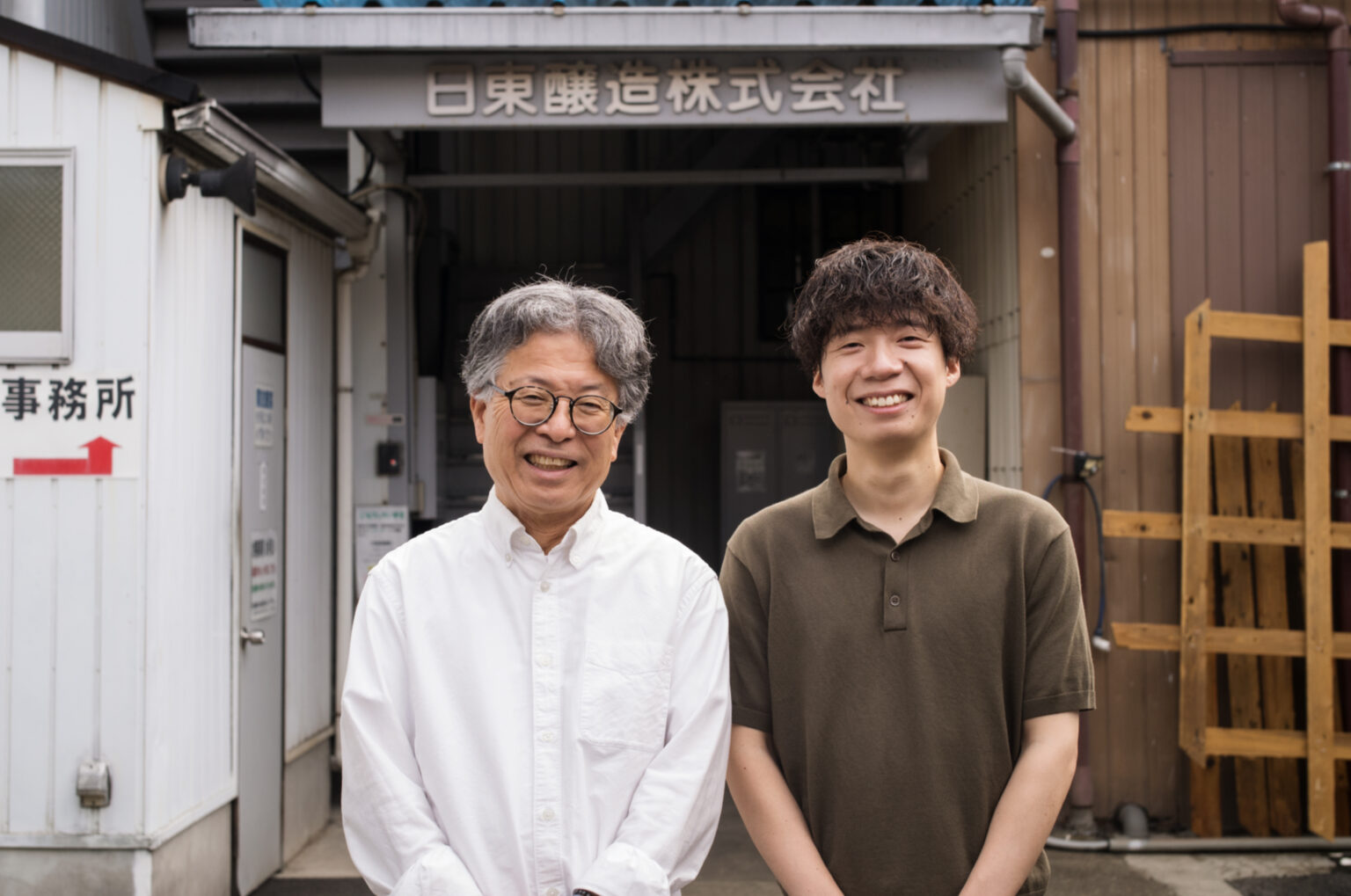
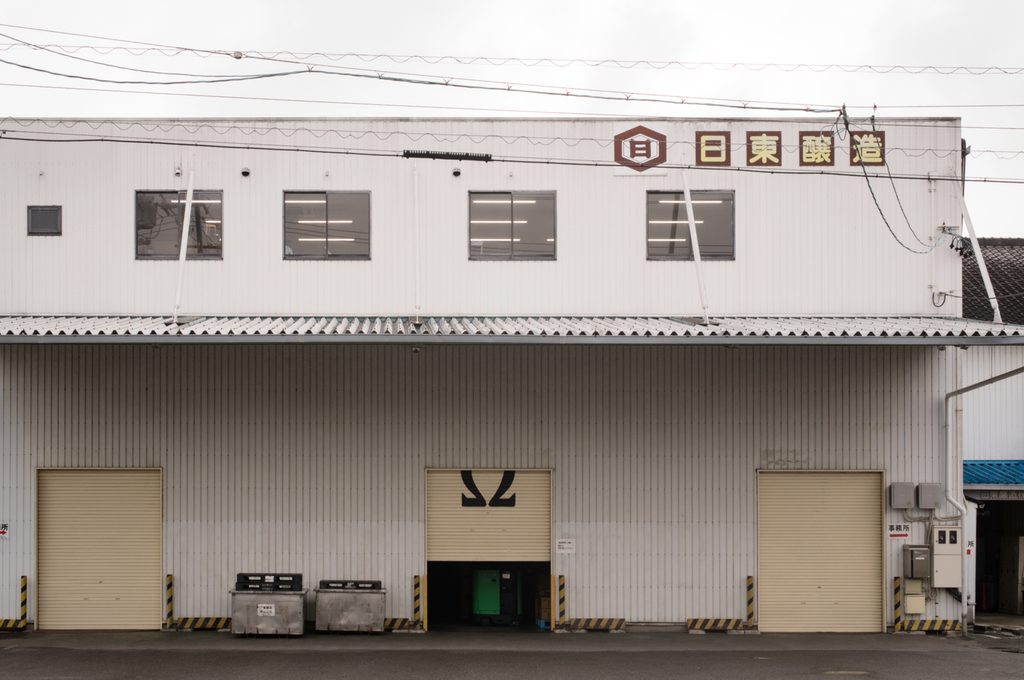
Say the word soy sauce, and most people picture a dark, deep-colored liquid. But in Hekinan, Aichi Prefecture, a pale, translucent amber soy sauce has been made since long ago — shiro-shoyu, or white soy sauce. Nitto Jozo Co., Ltd. has been making the white soy sauce born in this town since the early Taishō era, and it is the company behind the ultimate white soy sauce: Asuke-jikomi Mikawa Shirotamari.
Hekinan sits at the head of Mikawa Bay, facing onto Kinuura Bay. Across the water, the Chita Peninsula stretches south. Ninagawa Taisuke, the fifth-generation head of Nitto Jozo, who spoke with us for this feature, explains: “Chita was once a thriving port — a relay point where ships carrying soy sauce and sake from Osaka to Edo would dock.”
Chita prospered through maritime trade, and its wealthy residents drew in fine sake from elsewhere. Before long, sake brewing took root in Chita itself, and at its peak the area is said to have had more than 200 breweries. More breweries meant more sake lees — and it was from that lees that Mizkan began making vinegar. Out of this same current, breweries making shochu and mirin emerged as well. In this way, the stretch of land from the Chita Peninsula to Hekinan grew into a region rich in brewing culture.
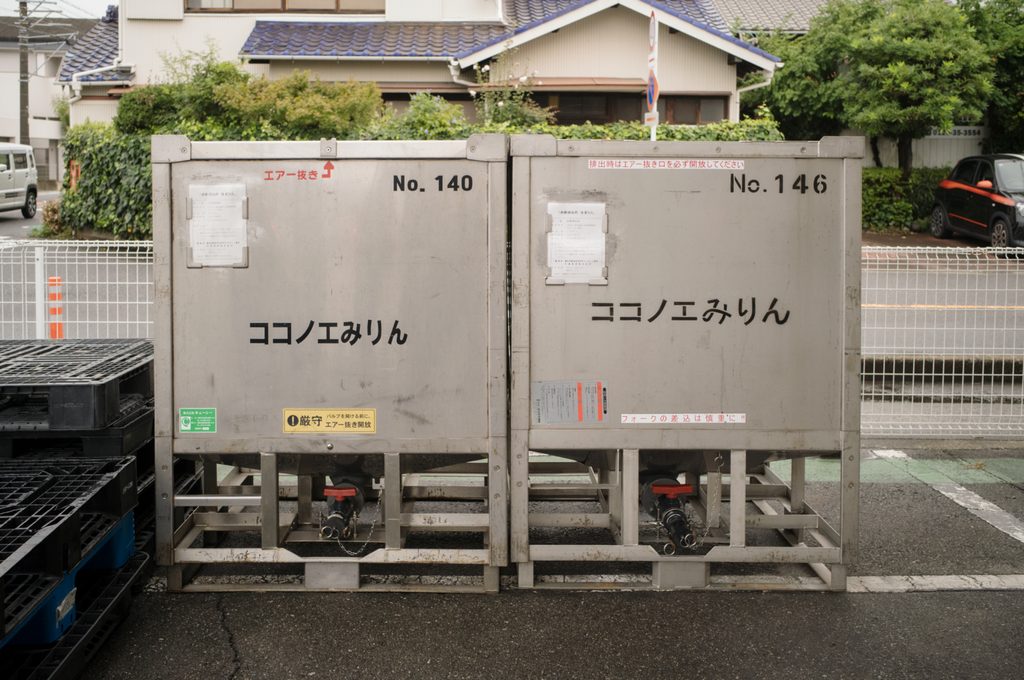
Photo: Outside the factory sit shipping containers from Kokonoe Mirin, another Hekinan brewery — a sight unique to this town built on fermentation.
The region’s hot, humid climate favored brewing as well. Here, miso made purely from soybeans — mame-miso — has long been a local specialty, and it was from this that tamari soy sauce was born. Because soybeans are its main ingredient, tamari is rich in protein and carries a powerful umami.
“Tamari culture runs so deep in Hekinan that even my grandmother never called it shoyu — she always called it tamari,” Ninagawa-san says. “Tamari has a deep color and real punch of flavor. It makes almost any dish taste better, but cook with it and everything turns black. That was its one weakness.
Japanese chefs who wanted to bring out the natural qualities of their ingredients without adding color went looking for a soy sauce that wouldn’t darken their dishes. What caught their attention was the clear liquid that rises to the surface of kinzanji miso, made purely from wheat. It had a soy-sauce-like aroma, a pale color, and a delicious taste — and this is said to be the origin of white soy sauce. It was precisely because this was a land steeped in tamari culture that its opposite, white soy sauce, came to be born here.
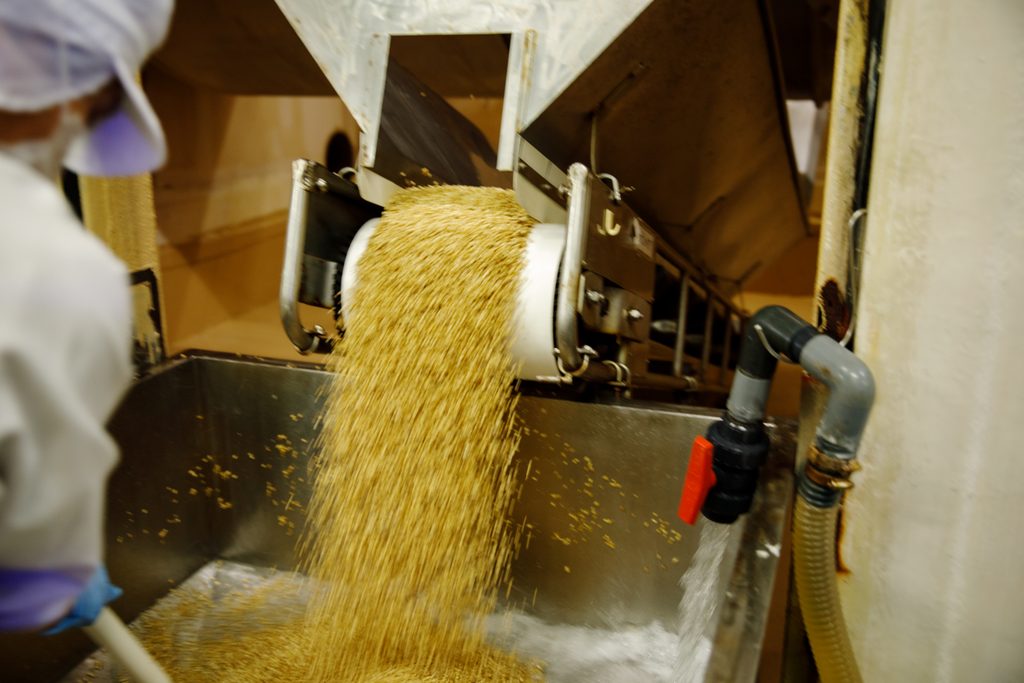
Ordinary soy sauce uses roughly equal parts soybean and wheat, aged for one to one and a half years. White soy sauce, by contrast, is nine parts wheat to one part soybean, aged for only about three months. The result is a very pale color and a clean flavor that brings out the character of whatever it’s paired with.
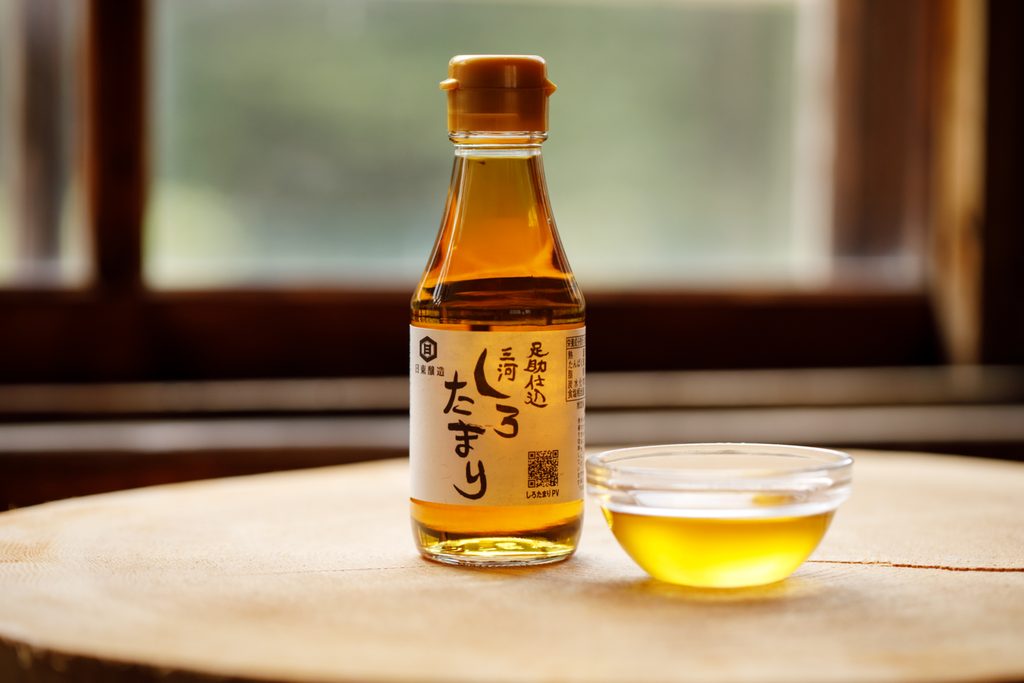
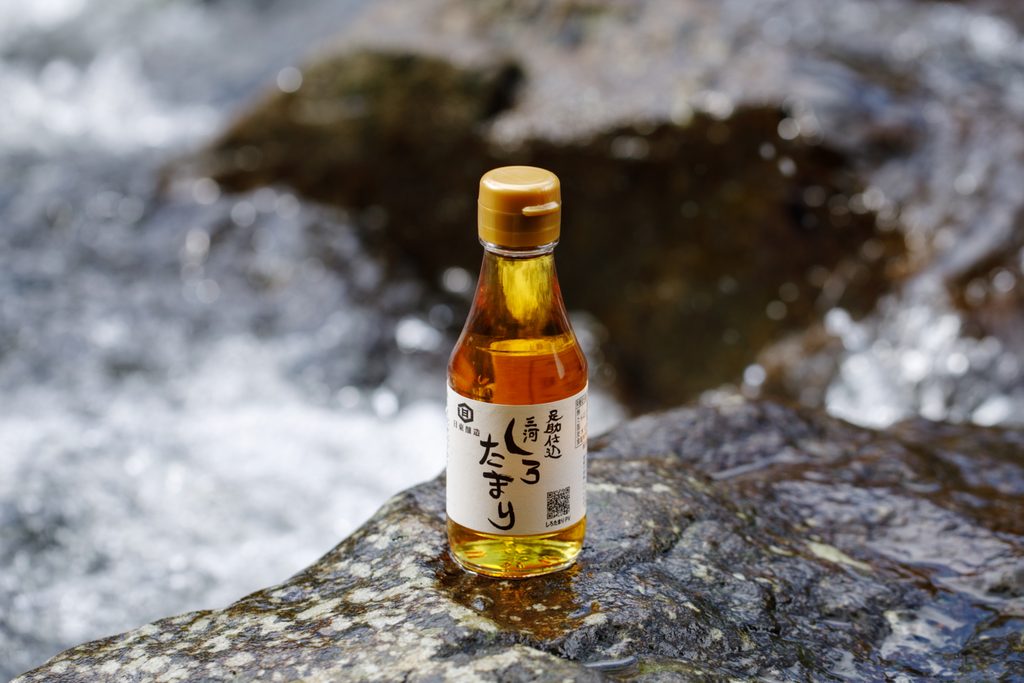
Photo: A translucent amber, utterly unlike the black of ordinary soy sauce.
Nitto Jozo’s history traces back to the early Taishō era, when a man named Kamiya began making white soy sauce in Hekinan. The Ninagawa family took over the business, founded the company in 1938, and renamed it Nitto Jozo in 1954. It has devoted itself to white soy sauce alone ever since.
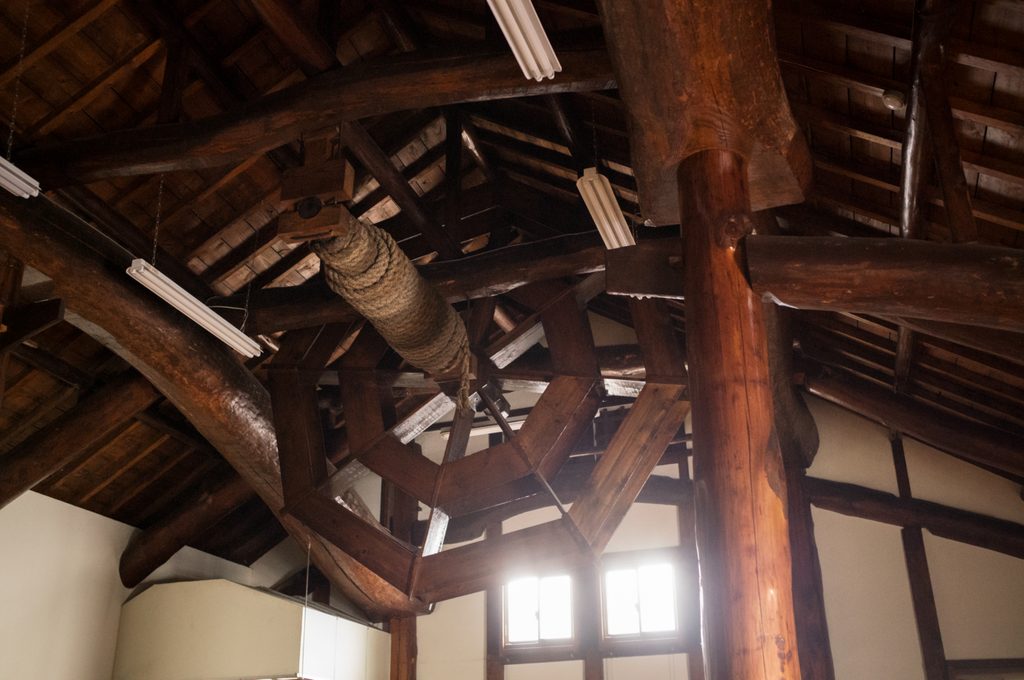
Photo: A wooden building at the Hekinan head office, once a sake brewery. Today the second floor serves as a dining hall, the first as the factory floor
Nitto Jozo’s signature product today, Asuke-jikomi Mikawa Shirotamari, was born from a sense of unease felt by the third-generation head — Ninagawa-san’s grandfather.
“By my grandfather’s time, the wheat had been replaced with imported wheat, and they were using tap water. He apparently felt all along that the taste had drifted quite far from the white soy sauce of the old days. Customers would often tell him it was delicious, but a little too salty…”
He wanted to bring back the white soy sauce of the past — to make something even more delicious, the ultimate white soy sauce. The third-generation head began by doubling the usual amount of wheat koji. Umami and sweetness increased, but the color inevitably grew darker. The biggest culprit behind soy sauce’s color is soybean. So he did away with the 10% soybean the recipe called for, using wheat alone as the raw material and doubling the koji. This became the prototype for what is now Mikawa Shirotamari.
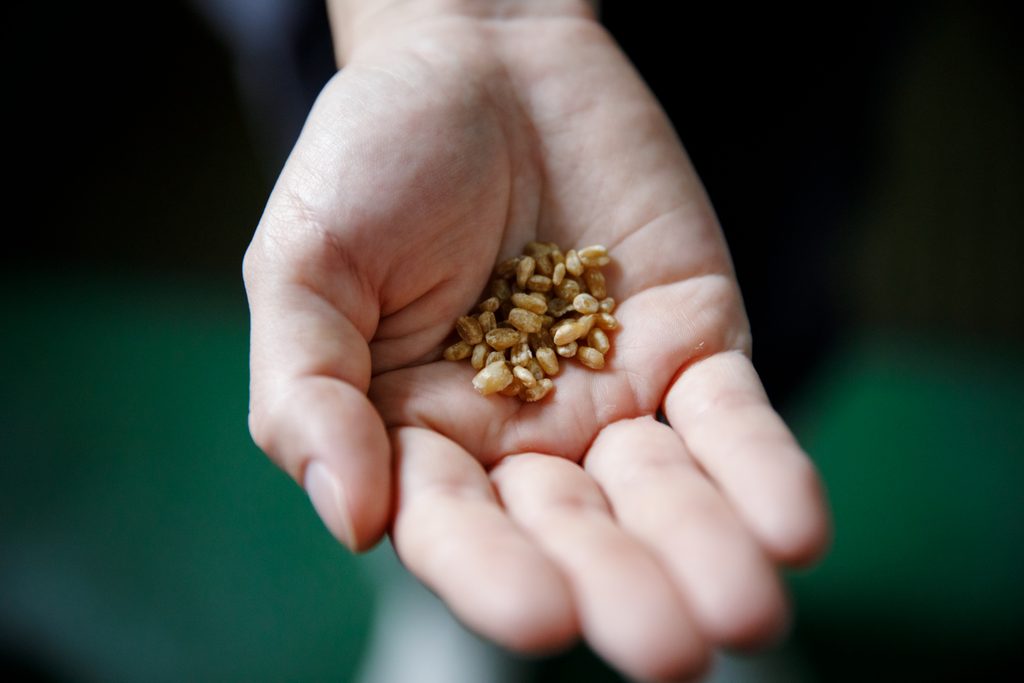
Photo: Wheat is steamed, cooled, seeded with koji spores, and left to rest to form koji. Shirotamari uses double the usual amount of this wheat koji.
The meticulously developed shirotamari achieved a flavor worthy of the ultimate white soy sauce, but the cost was far from small. Ordinary white soy sauce is brewed at a ratio of one part koji to two parts water; shirotamari uses one part koji to one part water — which naturally cuts the yield in half. The wheat, domestically grown, is used in double the quantity, and the salt is of the finest quality, yet the yield is still only half. At the time, the price came to roughly three times that of ordinary white soy sauce, and the company kept hearing the same response: “We can tell it’s delicious, but it’s too expensive to use.” Sales of shirotamari were, at first, far from promising.
It was Ninagawa-san’s father, the fourth-generation head, Yoichi, who spread the word about shirotamari. He held workshops on shirotamari all across Japan, from Hokkaido to Okinawa — explaining what shirotamari was, talking about Aichi’s brewing culture, and running hands-on classes where participants brewed their own batch. In total, more than 4,000 people took part.
“It was a lot of legwork, I suppose,” Ninagawa-san says. “But I think that effort is the single biggest reason shirotamari gradually spread.”
The grandfather created the flavor; the father carried it from hand to hand, person to person. Shirotamari is a taste that has been nurtured across two generations.
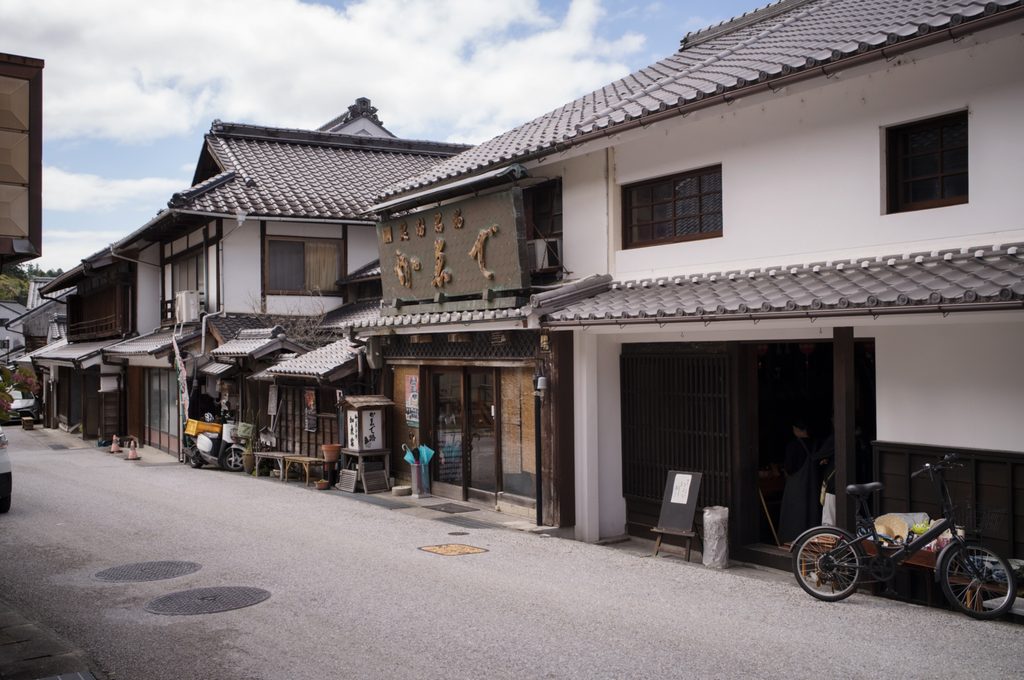
Beyond Hekinan, Nitto Jozo has a second production site, brewing there since 1999: the Asuke Brewery, in the mountain town of Asuke, Toyota City, nearly a two-hour drive from Hekinan.
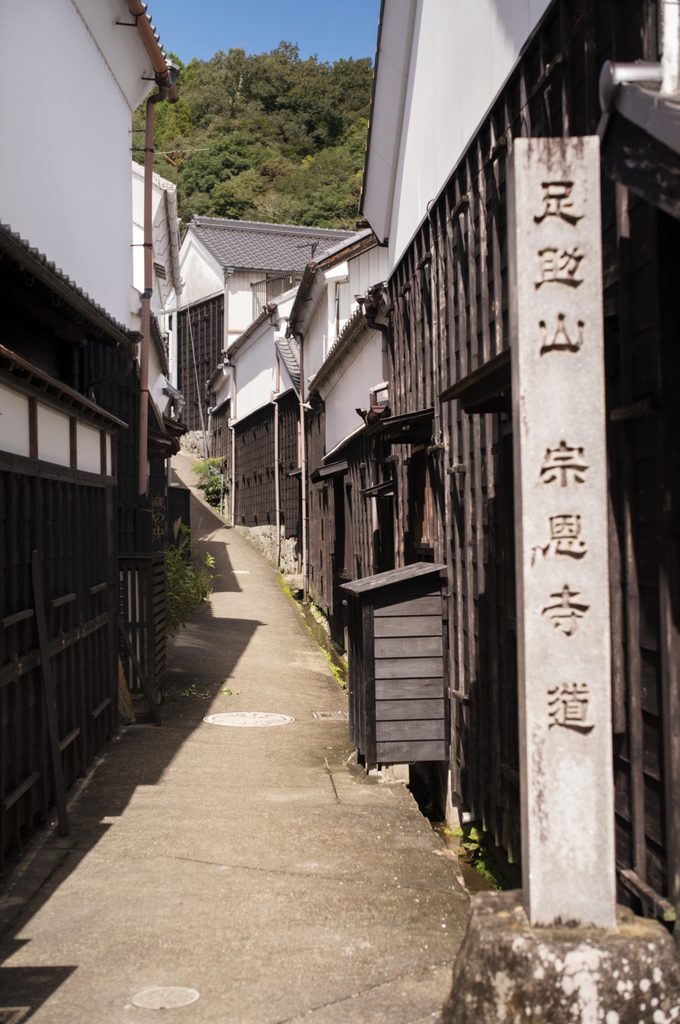
Photo: The streets of Asuke, which flourished as a post town on the Chūma Kaidō, the old “salt road.”
In the Edo period, Asuke flourished as a post town on the Chūma Kaidō, the road along which salt traveled inland. Salt made on the Mikawa coast was repacked into straw bags here and carried on to Shinshū as “Asuke salt.” Its old townscape, still lined with period houses, has been designated a nationally Important Preservation District for Groups of Historic Buildings. In a sense, the brewer from the coastal town of Hekinan had followed the very route by which the sea’s blessings once crossed the mountains.
“We came to Asuke in search of water,” Ninagawa-san says. “When we were making shirotamari in Hekinan, we were using tap water, but I really wanted to be particular about the water we used. So as we searched, we kept heading further and further upstream.”
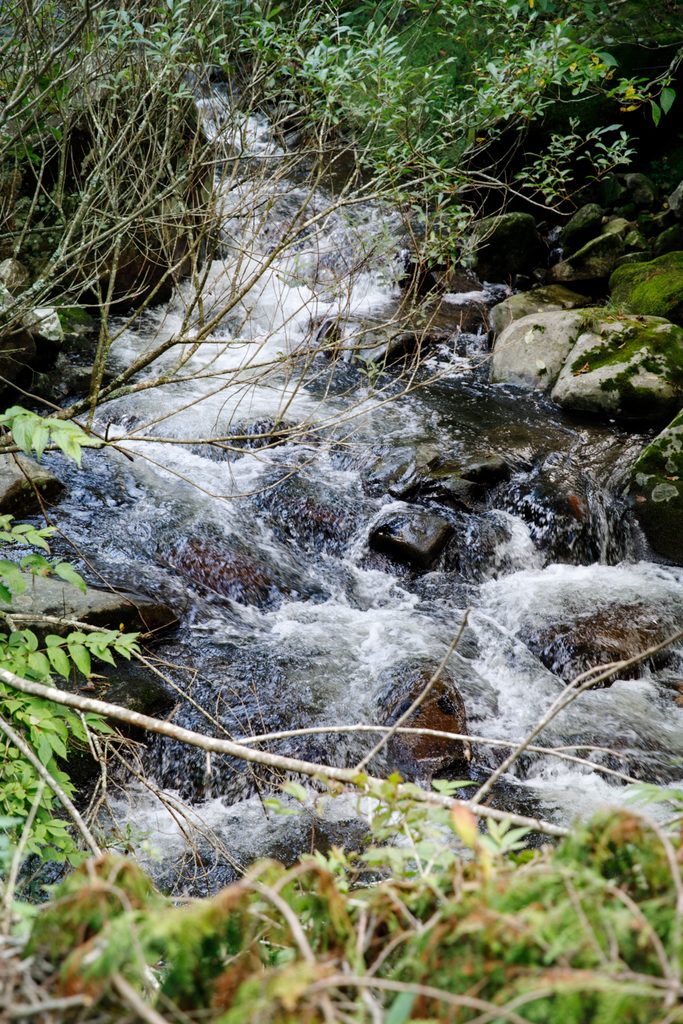
Photo: The river running beside the Asuke Brewery — the water that drew them further upstream in their search.
What they found was the well water of this area. At first, the plan was to carry the well water back to Hekinan for brewing, but there happened to be a disused school right next to the well, which Toyota City was looking for ways to put to use — and that led them to decide to brew here instead.
“The clean air, and the fact that it’s five or six degrees cooler here than in Nagoya, also pushed us toward that decision,” he says. “Brewing at a lower temperature gives shirotamari a paler color, and color is the thing we care about most. So we decided — since we were here — to brew it in this place, with this well water.”
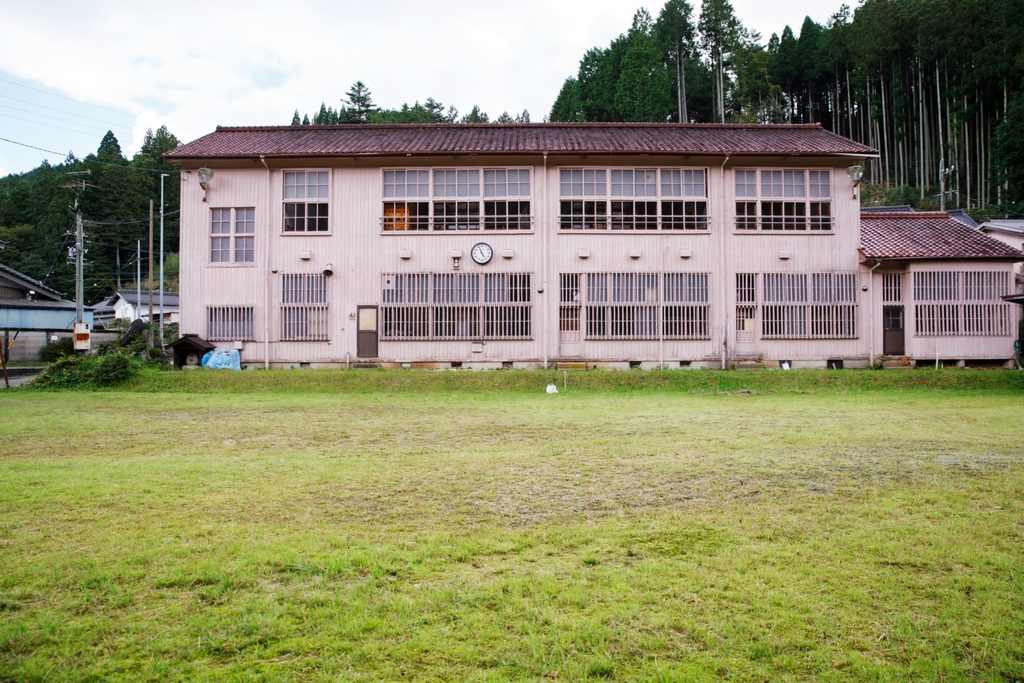
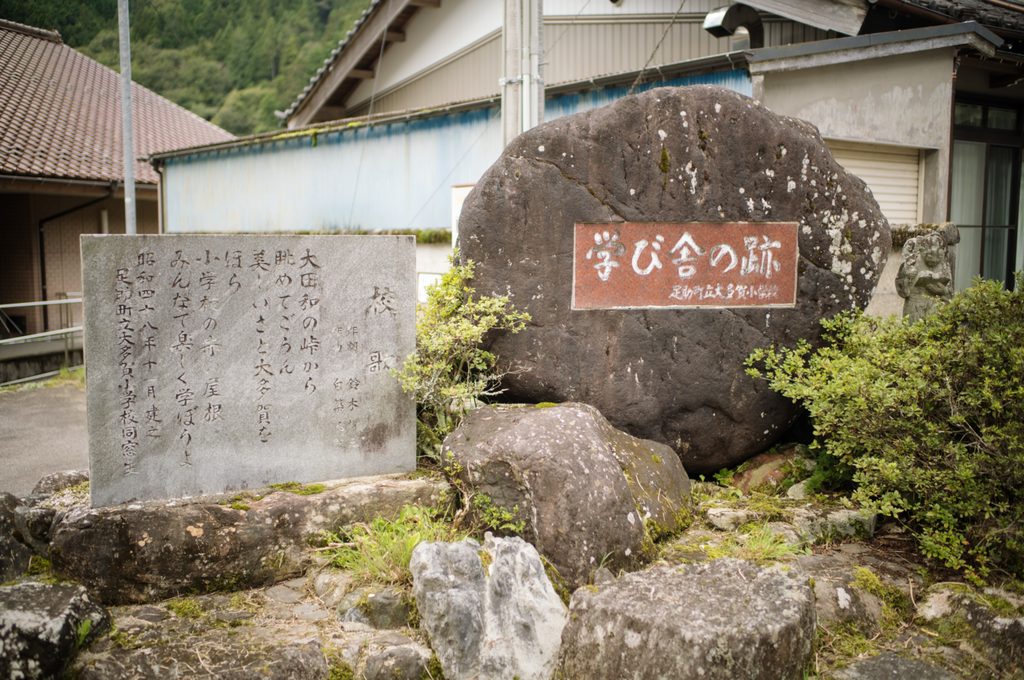
As a result, the koji is made in Hekinan and the brewing takes place in Asuke — a round trip of more than three hours.
“We might be the brewery in Japan where the koji-making site and the brewing cellar are furthest apart,” he laughs. “In a sense, we’re willing to ignore efficiency entirely if it means making the most delicious shirotamari we can.”
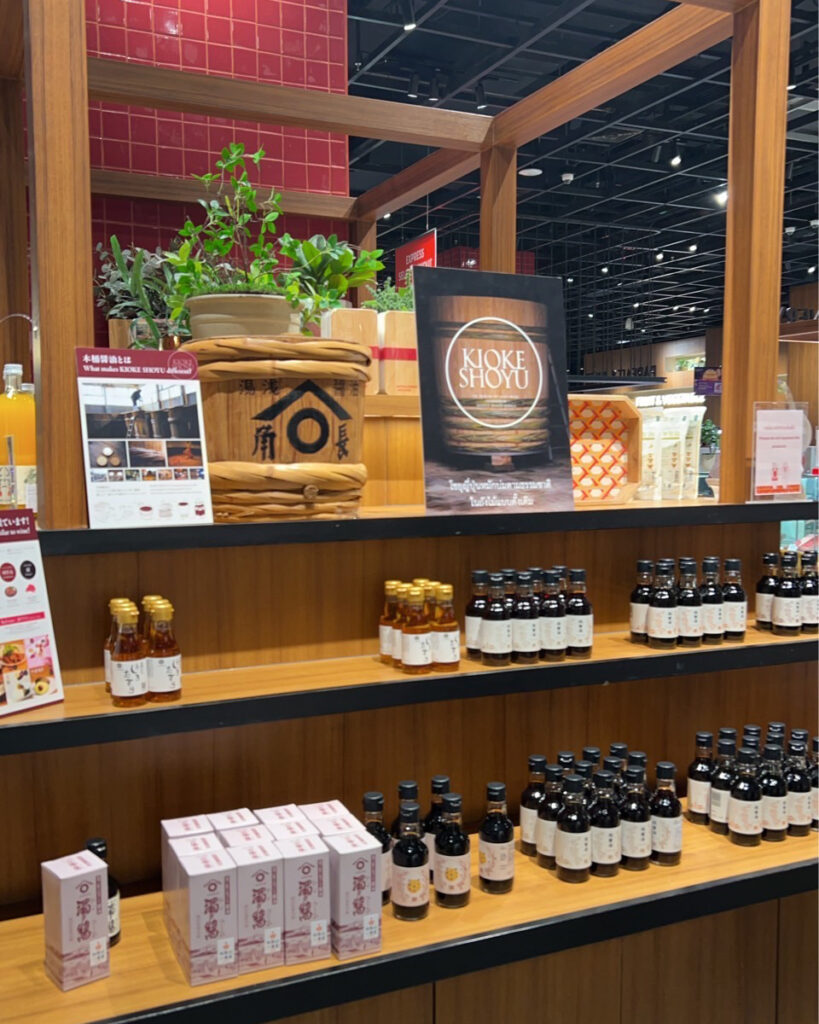
The brewing of Asuke-jikomi Mikawa Shirotamari uses traditional wooden barrels, known as kioke.
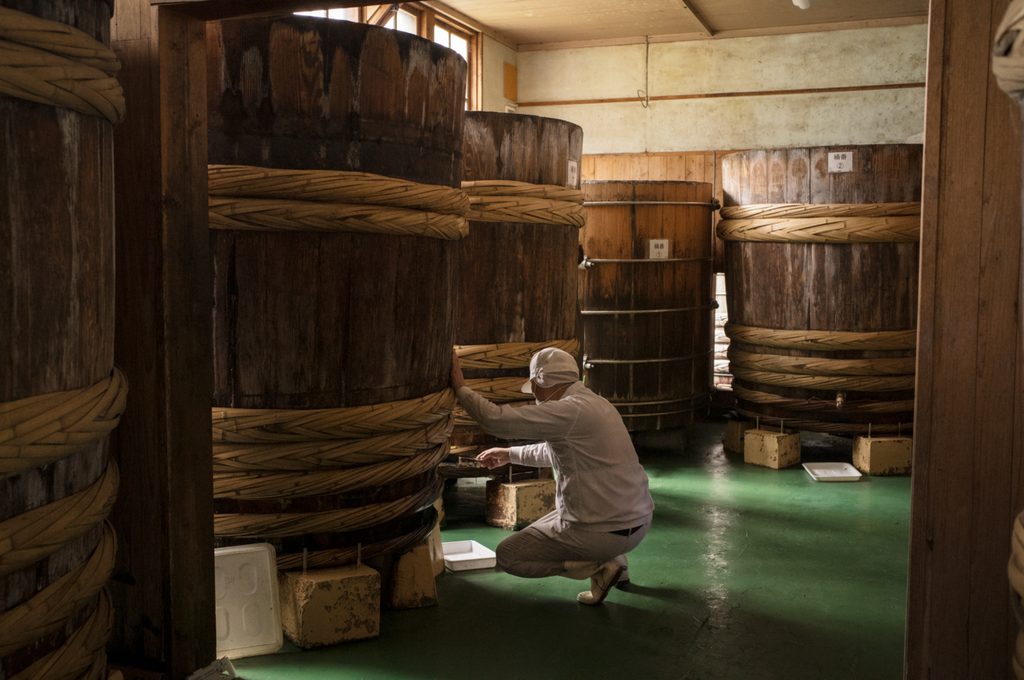
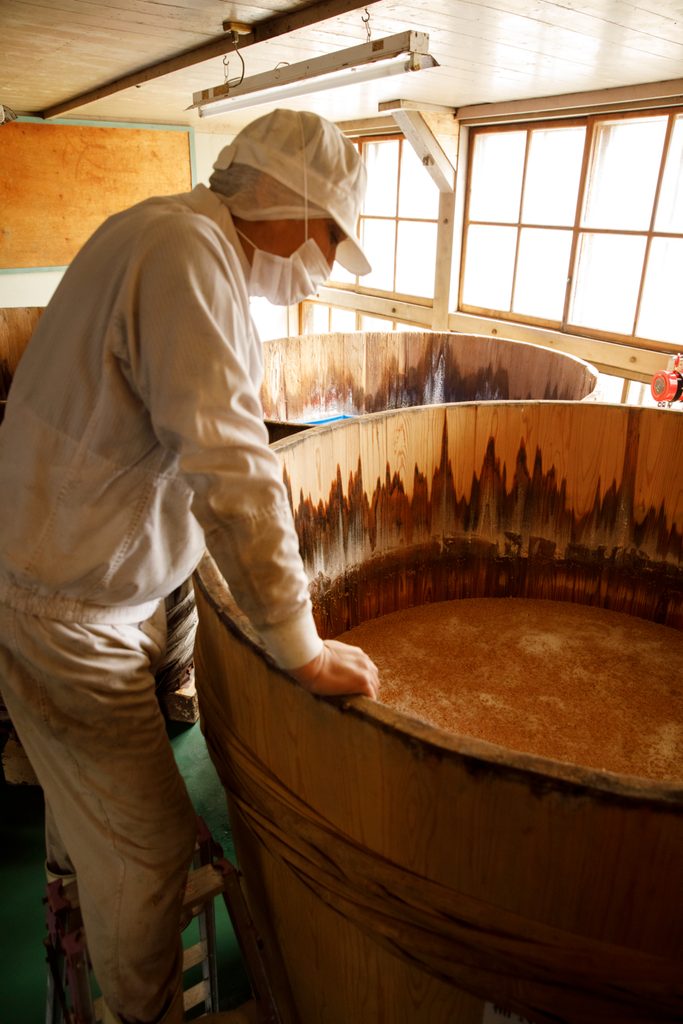
“An ecosystem of microorganisms builds up on the surface of the wooden barrels,” Ninagawa-san explains. “It’s an ecosystem that exists only in the Asuke brewery. Even if another company used the exact same method, they could never produce the same taste or aroma. There’s meaning in continuing to brew in this place — and in wooden barrels.”
Shirotamari brewed in wooden barrels takes on subtly different flavors depending on the character of each of the 22 barrels used. In the end, Nitto Jozo arrives at its signature taste by blending shirotamari from multiple barrels together.
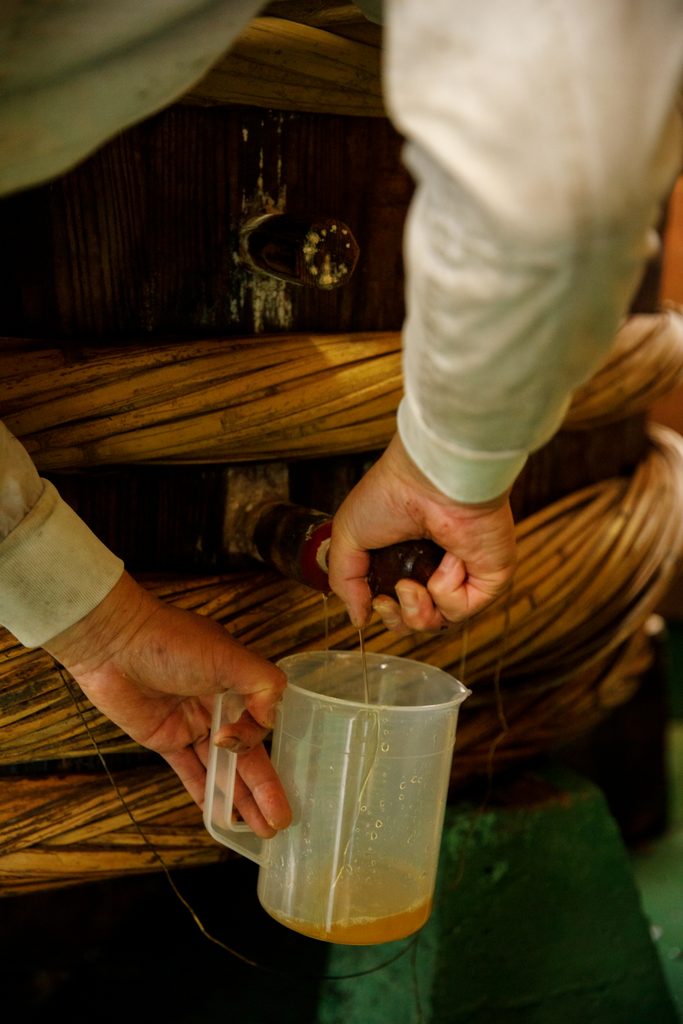
Once the mixture is in the wooden barrels, it is never stirred again. Human hands can only shape it up until that point. “What we can do is make good koji — that’s what affects the flavor the most,” Ninagawa-san says. How long to soak the wheat, how to steam it, what temperature to use — these are questions the team still works through by trial and error, adjusting for the season and the climate each time.
Koji, endlessly refined by human hands, and microorganisms that exist nowhere else but in this land — it is the overlap of these two things that gives rise to Nitto Jozo’s Asuke-jikomi Mikawa Shirotamari.
Shirotamari might seem intimidating to use at first glance, but according to Ninagawa-san, it’s actually an easy seasoning for households overseas, too. His recommendation: use it the way you would use salt.
“It goes wonderfully with delicate sashimi — white fish, squid, scallops. A little drizzle, whenever you get your hands on good fish or vegetables, really brings out the natural flavor of the ingredient. It’s not just for Japanese food, either — it pairs beautifully with Western and Chinese cooking too. I’d love for people to try it in all kinds of dishes, and experience the taste and aroma of shirotamari for themselves.”
A white soy sauce born in the land of tamari. A grandfather who worked to restore its old-time flavor. A father who traveled the length of Japan to spread it. And now a fifth-generation head, Ninagawa-san, pouring his energy into carrying this flavor overseas. Within every clear, transparent drop is dissolved the time the Ninagawa family has spent, across two towns — Hekinan and Asuke.