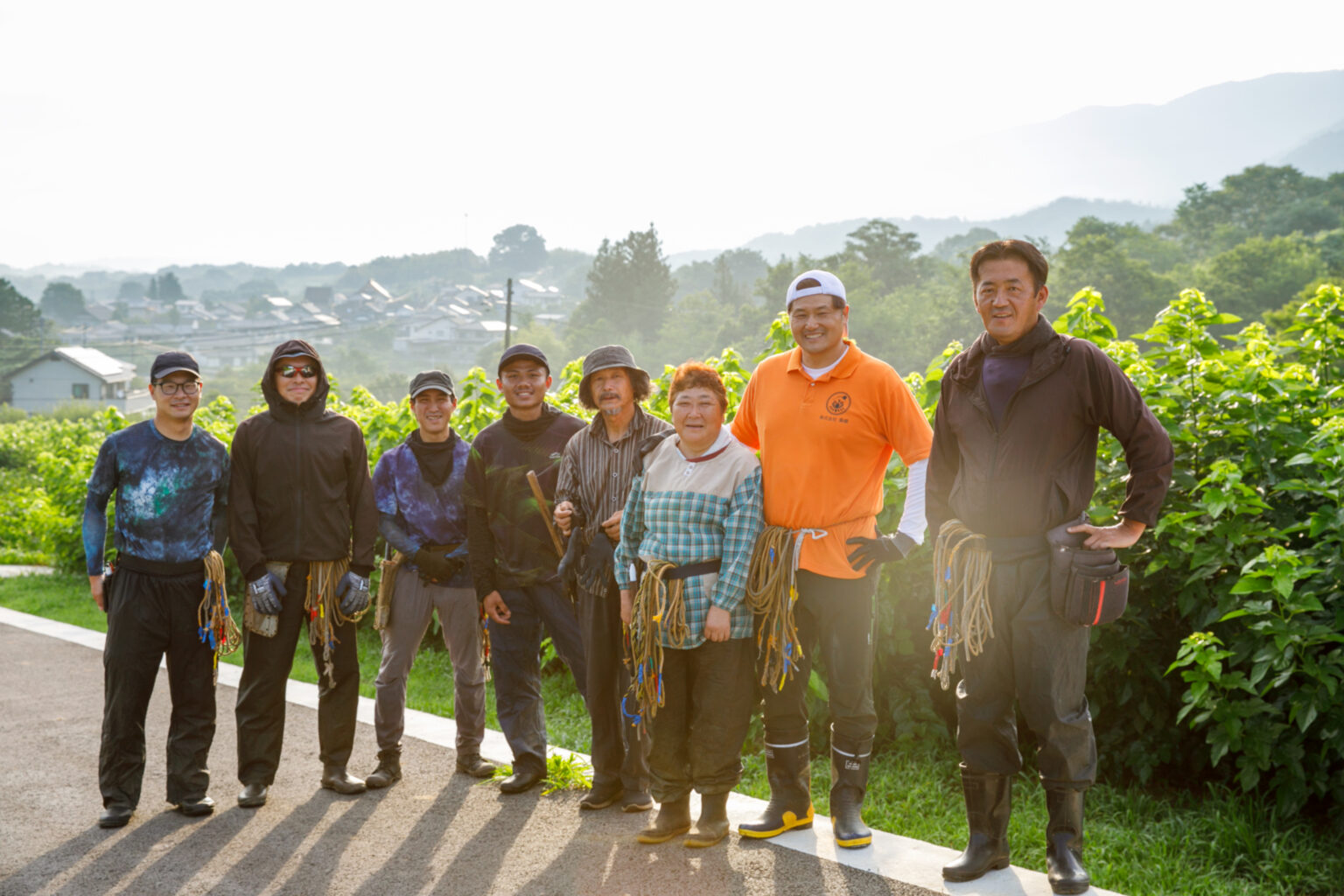
“Good morning!” A booming voice rings out across the mulberry fields at 5:30 in the morning. Once the morning meeting led by the broad-shouldered Han Seong-min comes to a close, the staff take up their sickles and set to cutting mulberry with real momentum. Within thirty minutes, the bed of one truck is already full, and they move on to the next. Watching them load mulberry one after another, undeterred by the early hour, is its own kind of pleasure to see.
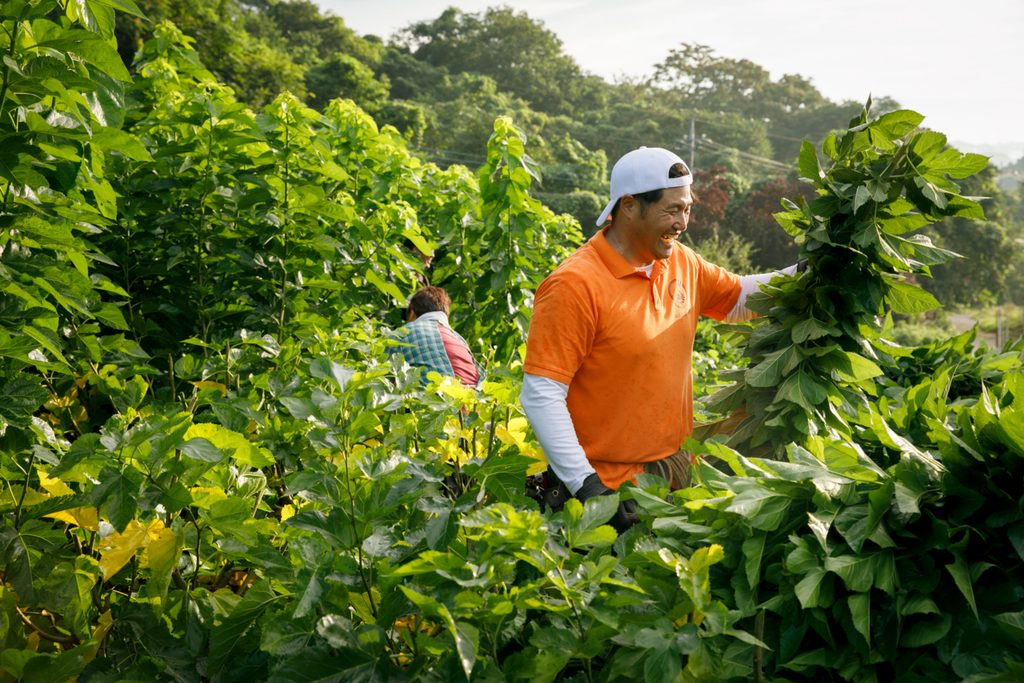
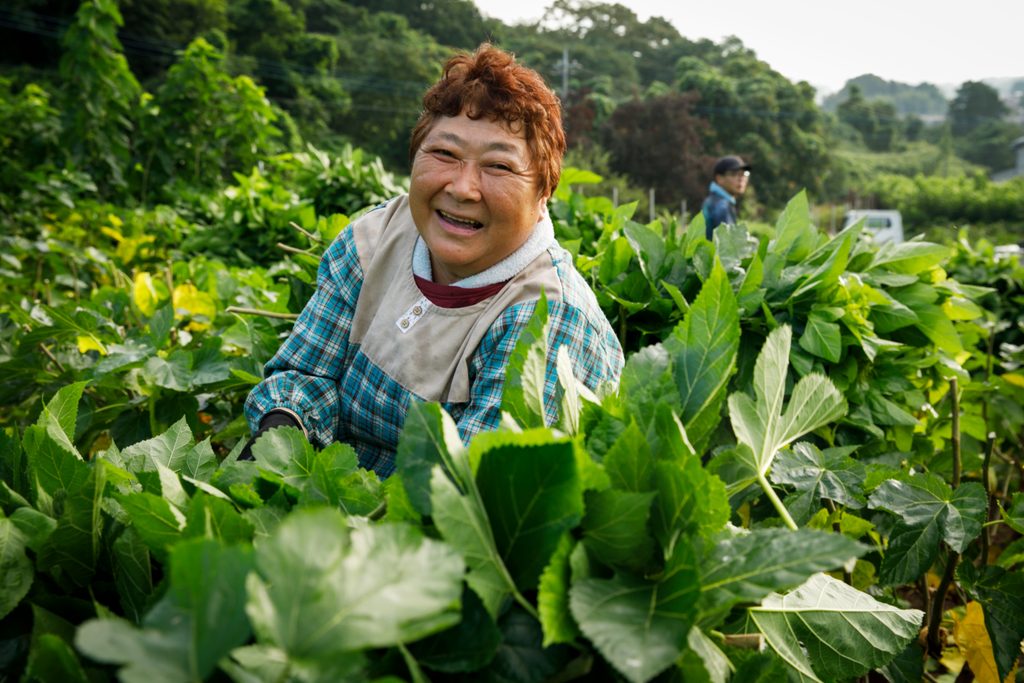
Photo: As the sun rises, staff gather in good spirits to cut mulberry. “Mulberry has ears, you know,” Han-san says with a laugh. “So I really believe that if you say something unkind, it carries straight to the plant. That’s why I tell my staff — if you’re going to argue, do it somewhere the mulberry can’t hear.”
Kuwa no Sato, the company Han-san leads, is based in Ichikawamisato, Nishiyatsushiro District, Yamanashi Prefecture — a town that once flourished on sericulture. In the early 1900s, a local resident named Ichinose Masukichi bought mulberry saplings to feed his silkworms, and noticed that one variety produced a clearly higher yield and stood up better to disease. In 1916, it was awarded top honors at the Third Sericulture Exhibition, hosted by the Yamanashi chapter of the Greater Japan Sericulture Association, and word of it spread across the country almost overnight. It was an era when Japan promoted sericulture nationwide as a source of foreign currency. Named “Ichinose mulberry” by the Ministry of Agriculture and Forestry, it spread across the country in no time at all.
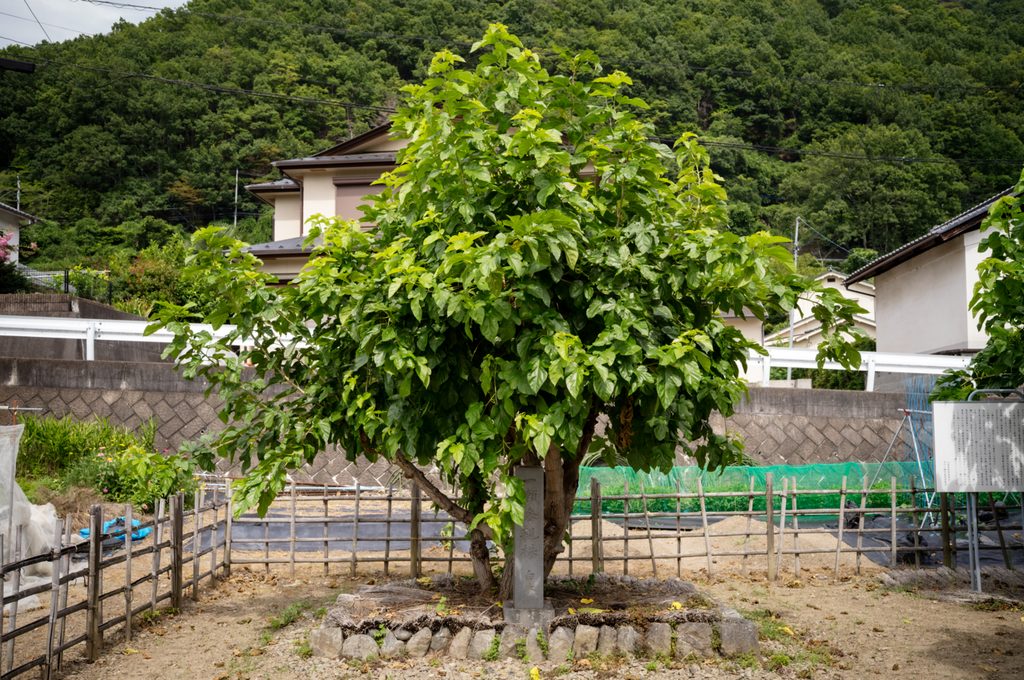
Photo: The original Ichinose mulberry tree, still standing. Nearby is a monument marking a visit from Empress Teimei — a sign of just how important mulberry once was to Japan, in the early 1900s.
What Han-san grows today is called Kairyo Ichinose — a further-improved strain of the very Ichinose mulberry once hailed, over a century ago, as the finest in Japan. Its leaves have grown larger and thicker, and its nutritional value is said to be even higher.
In what might fairly be called the birthplace of mulberry itself, Han-san grows mulberry descended from the very variety that shaped this town’s history, harvests it, and processes it into tea — all in-house, start to finish. The fields are grown without pesticides or herbicides.
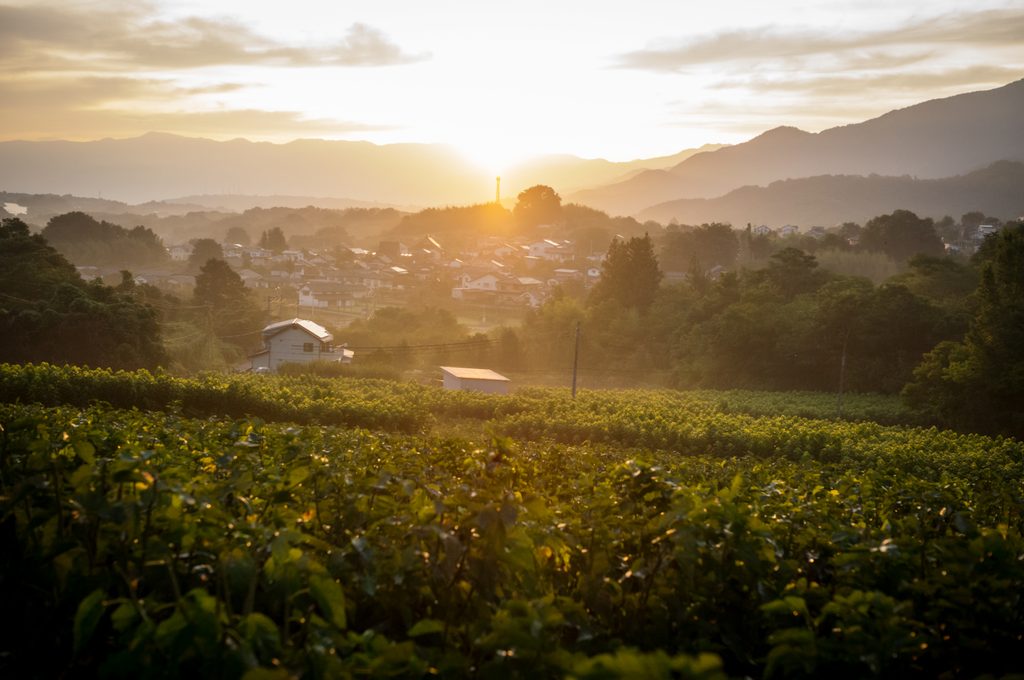
Farming without pesticides or herbicides is nothing unusual today, in an age when “organic” has become part of everyday life — even a lifestyle in its own right. But the reason Kuwa no Sato made that choice says a great deal about who Han-san is.
“Using pesticides and herbicides might make the work easier. But the soil will definitely wear out over time — that much is obvious. I want to hand this land on to the next generation in a usable state, even after I’m gone — ideally in even better condition than I found it. Once I started thinking that way, using pesticides was never really an option.”
And it’s this soil — raised without pesticides or herbicides — that gives Kuwa no Sato’s mulberry tea both its beautiful green color and its mellow flavor.
“The nutrients in a vegetable come from the soil, don’t they? We can’t eat soil directly, so instead we eat vegetables, to take in what the soil has to offer. Farm produce is essentially the soil’s nutrients turned into something visible, something we can eat — and mulberry works the same way. If the soil is healthy, I believe good mulberry will grow.”
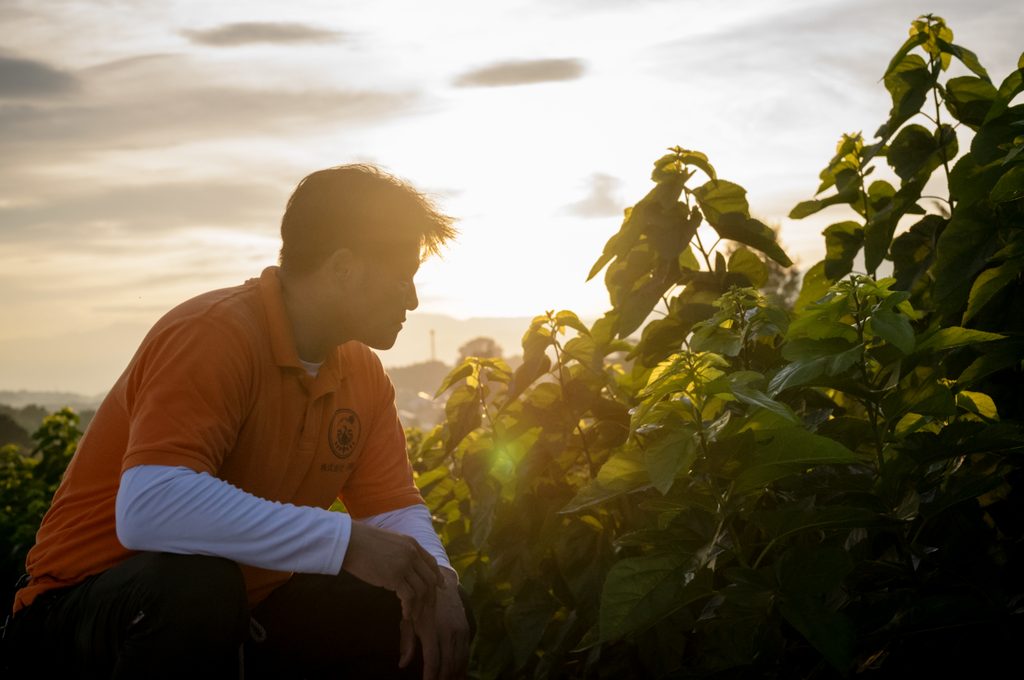
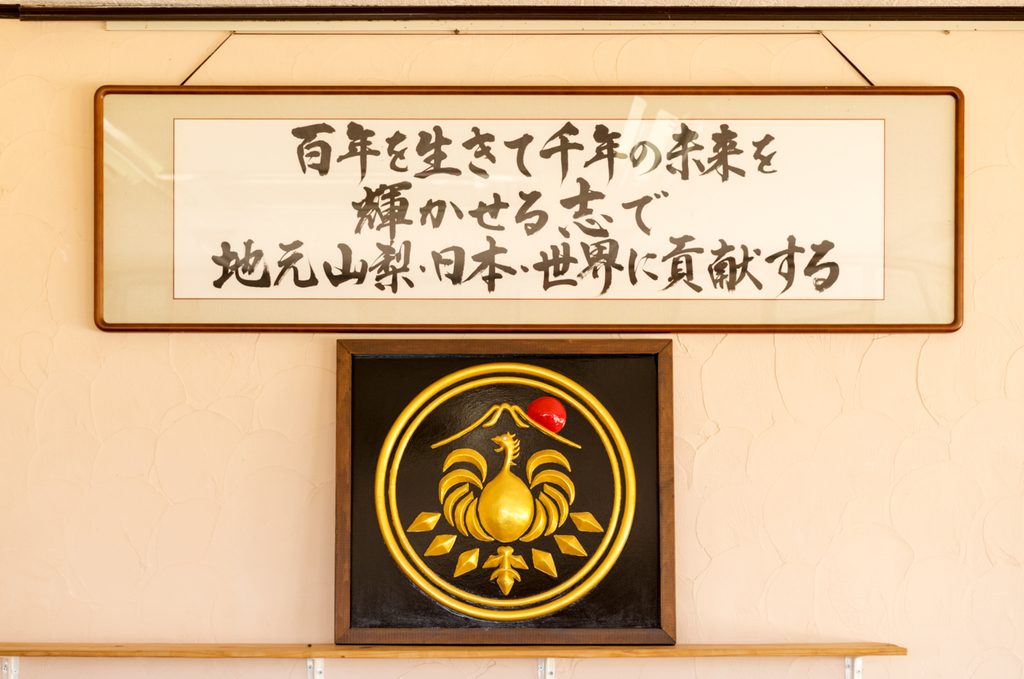
At Kuwa no Sato’s head office hangs a framed message: “With the resolve to live a hundred years and light up the next thousand, we will contribute to our home of Yamanashi, to Japan, and to the world.” What matters to Han-san is not so much how things stand today, but what effect today’s actions will have on the future. His gaze, always fixed intently on the mulberry, seems to be looking toward some distant horizon.
Profile
Han Seong-min, President, Kuwa no Sato
Born in South Korea in the 1978. Played handball in his student days. He met his wife, Miki, in 2002, and they married in 2004. He came to Japan thinking he’d stay “just one year, since we’d end up living in Korea eventually,” and began helping his father-in-law’s business — selling mulberry tea. In 2008, he founded Kuwa no Sato, taking charge of everything from growing mulberry to selling the finished tea. “Han-san’s Delicious Mulberry Tea” has since won a following not only in Japan, but overseas as well.